
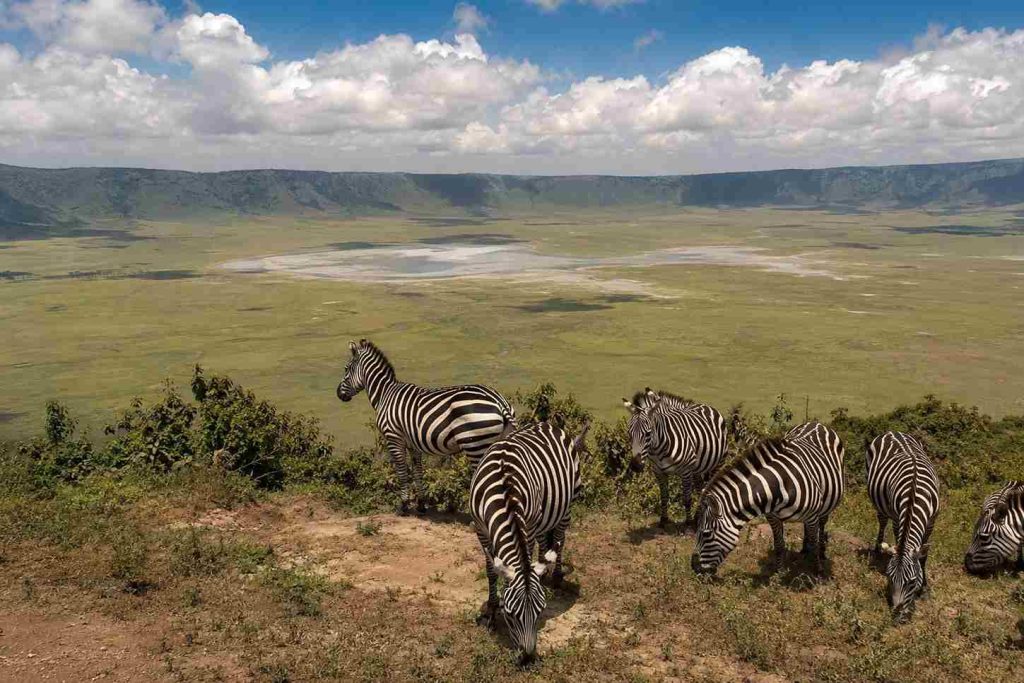
See the giant, undamaged volcanic caldera of the Ngorongoro Crater. It’s in northern Tanzania. It has various species and beautiful scenery. It has a self-contained ecosystem within a single protected area.
The crater has a 100-square-mile floor. It provides permanent water and grazing for over 25,000 large mammals. The caldera’s geology ensures visitors enjoy year-round wildlife sightings.
Critical Insights
- The Ngorongoro Crater is the world’s largest intact caldera. It is an isolated basin that provides a distinct, enclosed backdrop for game drives.
- The crater holds one of the highest concentrations of large carnivores. More lions and spotted hyenas are found than anywhere else in Africa.
- It’s a crucial refuge for black rhinos. The monitored plains provide a secure habitat for endangered East African black rhinoceroses.
- The Ngorongoro Crater is an accessible midpoint between Lake Manyara and the Serengeti.
Ngorongoro Crater: Africa’s Natural Wonder You Can’t Miss
Ngorongoro Crater is one of the highlights of a Tanzania safari. It is one of the must-visit destinations. This is due to its unique blend of animals, landscape, and accessibility.
-
Massive Volcanic Caldera
Ngorongoro Crater was formed when a giant volcano collapsed millions of years ago. It is now one of the world’s largest intact volcanic calderas. It’s also Tanzania’s most remarkable geological landmark
-
Exceptional Wildlife Density
The crater floor supports thousands of animals throughout the year. It also has an enclosed environment. This gives excellent opportunities for wildlife viewing during a Ngorongoro Crater safari drive.
-
Home to the Big Five
Visitors can spot lions, elephants, and leopards within the conservation area. They can also see buffalo and rhinos. There are only a few safari destinations where tourists can see all five iconic species.
-
Spectacular Scenery
The caldera has grasslands and forests within its steep walls. It also has lakes and wetlands. The landscapes are diverse and provide good scenery and habitat for wildlife.
-
Conservation Area
Ngorongoro is an important part of a UNESCO World Heritage Site. The conservation work saves the area’s wildlife populations and natural beauty.
-
Crucial Sanctuary for the Endangered Black Rhino
Poaching decimated black rhino numbers across sub-Saharan Africa. But a small, strictly monitored population thrives within the crater. It is the most reliable public wildlife viewing location in East Africa.
Why is the Ngorongoro Crater special?
Wildlife migration is a common theme in many African safari tours. But Ngorongoro Crater has resident animals in stable numbers. The fertile crater floor provides water and food throughout the year. It’s why many species remain within the area.
The crater spans around 260 square kilometers. It’s surrounded by towering walls that rise more than 600 meters above the floor. This natural enclosure offers a unique environment that supports a variety of animals.
The animals are confined to a small area. Even a short visit allows visitors to enjoy regular sightings. That’s why Ngorongoro is so attractive to vacationers with little time.
Your Tanzania Safari & Ngorongoro Crater
The Ngorongoro Crater is part of Tanzania’s famed Northern Safari Circuit. Many travelers visiting the crater also go to nearby destinations. The Serengeti and the Lake Manyara National Park are accessible from here.
The crater is easy to access, so visitors can include it in their itineraries. It’s a great addition, whether it’s a short or extended trip. A single day in the crater delivers memorable wildlife encounters. It’s why going there is a valuable factor in many Tanzania safari plans.
Frequently Asked Questions
Why is Ngorongoro Crater famous?
It is famous due to its large, intact volcanic caldera. The area also has abundant wildlife. It offers excellent opportunities to see the Big Five.
How long should you spend inside the Ngorongoro Crater?
A single half-day game drive lasts between four and six hours. This is enough time to explore the crater floor. But vehicles must exit after their allotted time block. This is because of the small size of the crater and the rigorous park rules. Each shift gives plenty of opportunity to see the main permanent wildlife populations.
Is Ngorongoro Crater good for first-time safari travelers?
Yup. It is a great destination because of the dense concentration of wildlife. It’s also small, making it perfect for first-time safari goers.
When is the ideal time to visit the Ngorongoro Crater?
Wildlife viewing is outstanding year-round due to the resident nature of the animals. That said, the best time to visit is during the dry season, June to October. The grasses are short during these months, which increases visibility. The thin water supplies also force the herds to congregate around major springs. This means the tour operators like GAIA Legacy Travel know where to find them.


