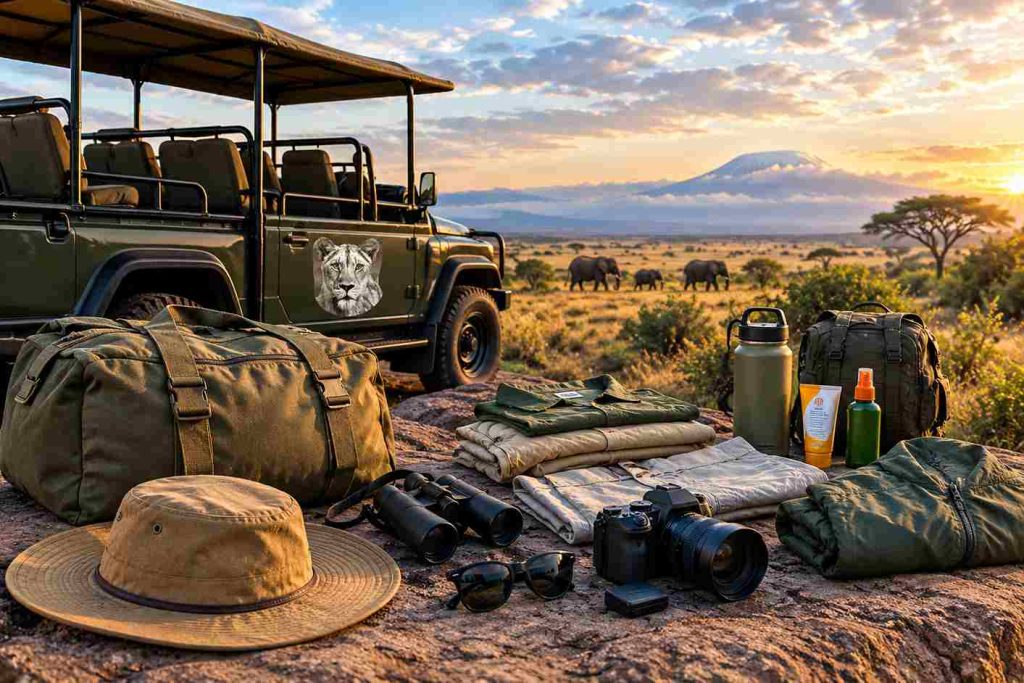
Pack the right clothes and travel accessories when preparing for an African safari. Bring personal belongings that are appropriate for outdoor activities and shifting weather conditions. Include comfortable shoes and light, neutral-colored attire. Make sure you have your travel paperwork and remember to pack sunscreen.
A well-thought-out safari packing list will guarantee a relaxing and pleasurable trip.
Important Takeaways
- You need luggage with soft sides. Frameless soft duffel bags are required for internal regional flights. Their maximum weight restrictions are between 15 and 20 kg (33 and 44 pounds).
- Choose muted colors. Hues of tan, khaki, brown, and olive merge in with the vegetation. Dark blue and black attract tsetse flies. Bright colors alarm wildlife.
- Layering can keep you comfortable. You’ll experience fluctuating temperatures during African safari tours. It will be cold during dawn game drives and warm in the afternoon. It’s why adaptable layers are essential.
- Focus on sun and insect protection. High-SPF sunscreen, polarized sunglasses, and wide-brimmed hats are necessities. In the bush, DEET-based repellents are essential.
- Pack quality electronics and optics. Bring a good pair of 8×42 or 10×42 binoculars. Make sure your camera has dust protection.
African Safari Packing List: Essentials for Comfort and Style
When packing for a safari, comfort and practicality must be taken into account. Here are some suggestions on what to wear on safari.
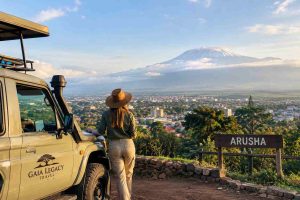
Neutral-Colored Clothing
- Choose clothing that is light brown, olive, khaki, or beige. It will allow you to blend in with the environment.
- Bright colors should be avoided as they could attract attention. You should also stay away from black or dark blue clothing. These can attract certain insects in some regions.
Lightweight, Breathable Fabrics
- Choose moisture-wicking shirts and lightweight pants. They’ll keep you comfortable during warm afternoons.
- Long sleeves and long pants offer extra protection from the sun and insects.
Warm Layers
- Evenings and early morning game drives are typically cool. Don’t forget to pack a fleece jacket or lightweight sweater for further warmth.
Comfortable Shoes
- Walking or hiking shoes with closed toes are perfect for walking safaris.
- Casual sandals or slip-on sneakers are perfect for relaxing at camp.
Hat and Sunglasses
- A hat with a wide brim offers shade. It also helps protect your face and neck from strong sunlight.
- Bring polarized sunglasses. It reduces glare and improves comfort during long game drives.
Raincoat
- When traveling during the rainy season, a lightweight waterproof jacket is very useful.
Essential Travel Gear for Your Safari Packing List
Here are a few more travel essentials to make your African safari more enjoyable.
- Binoculars. Invest in a good pair of binoculars. It will allow you to see distant wildlife up close. It enhances game drives and birding.
- Camera and extra batteries. Bring batteries, backup memory cards, or a portable charger. During long game drives, there are occasionally few possibilities for charging.
- Daypack. Stow necessities like water, sunscreen, and food in a small backpack. It will ensure you have everything set up for the safari.
- Reusable water bottle. It’s important to stay hydrated, especially in hotter climates. An insulated bottle of water maintains its temperature throughout the day.
- Headlamp or flashlight. Power outages sometimes happen at remote safari camps. A flashlight is also useful when walking around after dark.
Health and Personal Care Items to Bring in African Safari Tours
Preparing for your health and comfort is as important as packing clothing for an African safari.
- Sunscreen. Choose a broad-spectrum sunscreen with an adequate SPF. This will protect you from strong UV rays.
- Bug deterrent. To reduce insect bites, choose one that has active ingredients.
- Prescription drugs. Keep enough prescription medications with you for the entire trip. Additionally, make sure you have copies of your medications.
- Basic first aid supplies. Antiseptic wipes, painkillers, and adhesive bandages should be included. Make sure your personal medical supplies include blister treatment.
- Wet wipes and hand sanitizer. These things are handy during game drives. They’re also vital in remote areas where handwashing facilities are not available.
Frequently Asked Questions
What colors should I wear on an African safari?
Light brown, beige, and khaki are neutral hues that work well in a safari. They are useful for observing wildlife and blend well with the surroundings.
Do safaris require hiking boots?
For the majority of safaris organized by GAIA Legacy Travel, comfortable closed-toe walking shoes are enough. Walking safaris are the only purpose for hiking boots.
How can I shield my gadgets from dust on game drives?
Store cameras and tablet devices in dry, sealable bags for protection. You can also use padded camera bags. Bring lens cleaning cloths and a simple blower bulb. These will clear dust from glass elements safely.
Is laundry service available at safari camps?
The majority of tented camps and safari hotels offer laundry services. Clothing washed in camp is usually sun-dried and ironed. But many camps don’t wash undergarments for cultural reasons. Bring travel detergent for hand-washing small items.